Sim Racing Is Not a Shopping List
Why platform fit, seating and a repeatable brake should come before torque, motion and expensive hardware theatre.
The convincing sim racing setup is a system. Software, driving position, controls and display must agree. Auto Culture Society image.
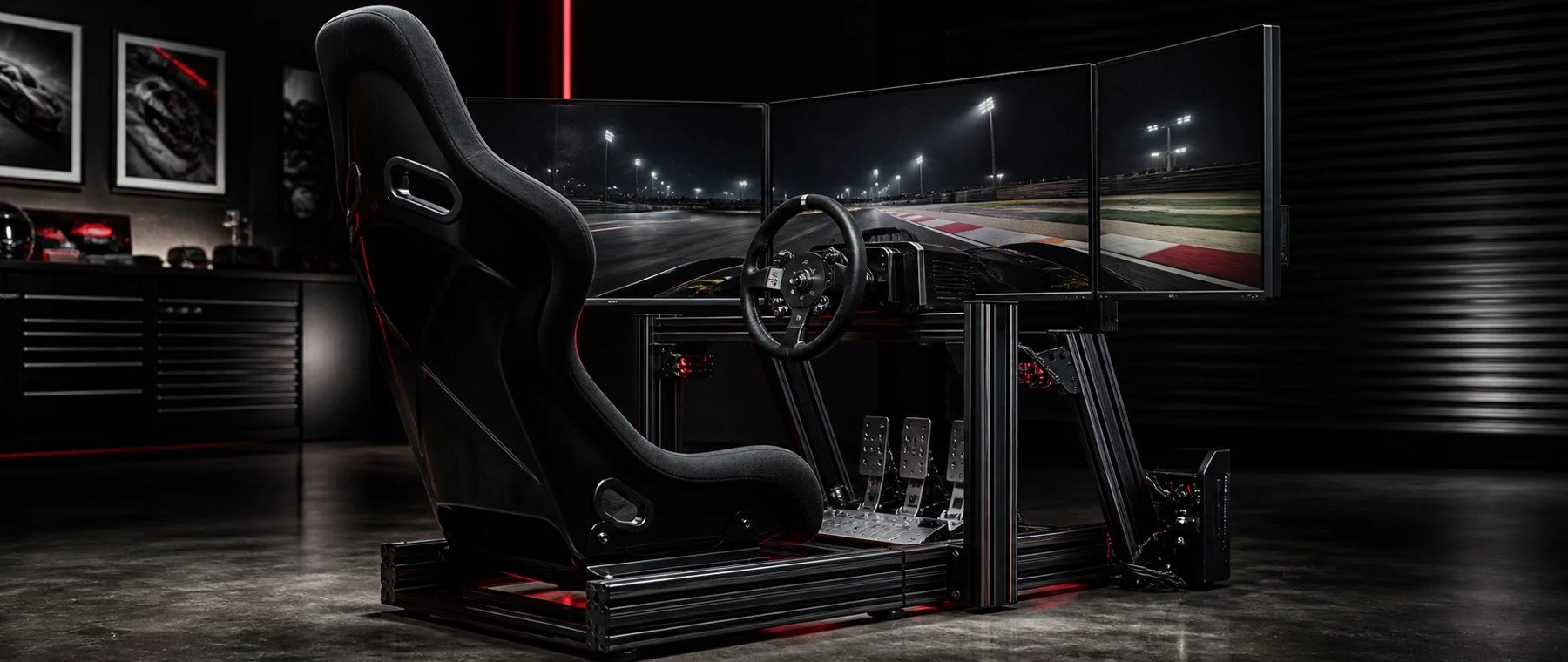
The expensive mistake is buying backwards
Sim racing can begin with a controller on the sofa and end with a rigid cockpit, direct drive motor, load cell pedals, multiple displays and enough cable management to qualify as infrastructure. The mistake is assuming that progress must follow the price list.
A powerful wheelbase attached to a moving desk does not create precision. A load cell brake beside a chair that rolls backwards does not create repeatability. Motion cannot repair a poor field of view, and a beautiful steering wheel cannot make the wrong game or platform feel right. The parts matter, but the order matters more.
The wheelbase tells you what the car is doing. The brake and driving position decide whether you can do the same thing twice.
Choose the platform before the hardware
PC is the broadest route for simulation software, specialist peripherals and future expansion. PlayStation 5 offers a more curated path built around a smaller group of strong experiences. Xbox remains an accessible ecosystem route, but wheel compatibility and game level support deserve careful checking. None is automatically correct. The right platform is the one that supports the racing you will actually do.
Choose the discipline before the cockpit fantasy
Circuit racing, rally, endurance, oval competition, drifting and road car collecting reward different software, controls and habits. A buyer who names the experience first can spend with purpose. A buyer who starts with a catalogue often ends up funding capabilities that never leave the settings menu.
The rig is part of the control system
Set the body first. The seat should support the pelvis and lower back. The wheel should meet bent elbows rather than pulled shoulders. The brake should be reachable at full pressure with the knee still slightly bent. The display should sit close enough, and at the right height, for a believable field of view.
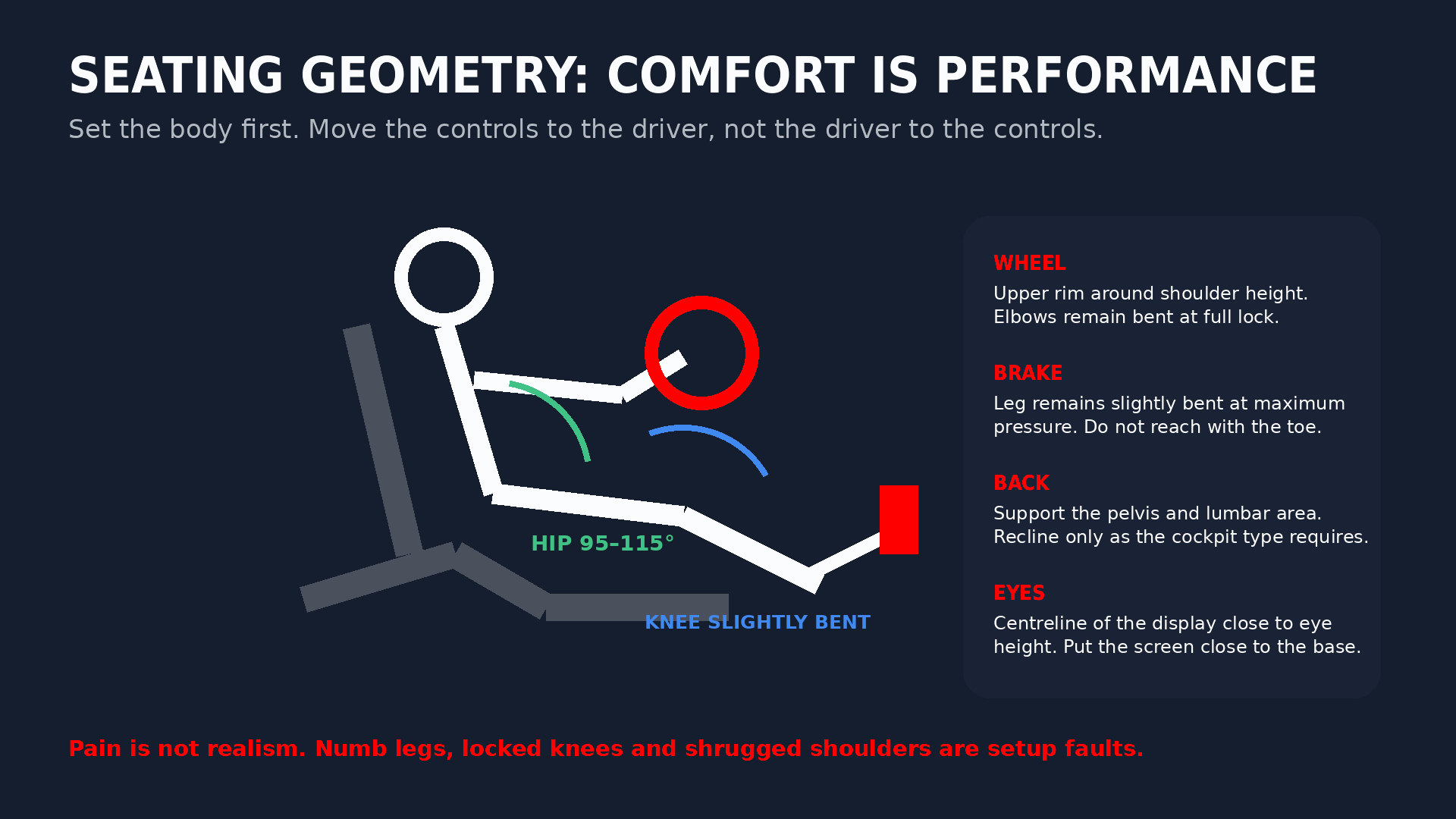
Comfort is performance. Numb legs, locked knees and shrugged shoulders are setup faults, not evidence of realism. Graphic: Auto Culture Society.
The brake is the first serious performance upgrade
Consistency comes from applying and releasing pressure predictably. That is why a stable pedal mount and a repeatable brake usually improve lap time before a stronger motor does. The fastest component is the one that makes the driver’s input easier to reproduce.
Torque comes later
Direct drive can reveal tyre load, kerbs, steering weight and the onset of a slide with impressive clarity. It earns its place after the rig, brake and driving position can use that information. Beyond the sensible enthusiast range, more torque is primarily dynamic range and headroom. It is not an automatic shortcut to pace.
The sensible upgrade order
The complete Auto Culture Society guide treats a simulator as one connected system. This is the short version of the buying order.
Platform and games. Choose the software, competition structure and vehicle disciplines that will keep you returning.
Driving position and rigidity. Stop the seat, pedals and wheel from moving independently of the driver.
A repeatable brake. Buy controllable pressure and secure mounting before chasing stronger force feedback.
Wheelbase and steering ecosystem. Add detail, response and useful dynamic range with a compatibility route that can grow.
Display, audio, tactile feedback and motion. Correct geometry first. Add theatre only when the control system underneath it is already convincing.
The enthusiast sweet spot is not the cheapest setup or the most expensive one. It is the first setup whose weaknesses stop interrupting the driving.
Give the first month a job
Before another purchase, spend thirty days making the current setup predictable. Use one car and circuit, calibrate every control, establish braking references, practise clean exits, race without incidents and review the actual bottleneck. Specialise only after the basic inputs become boringly repeatable.
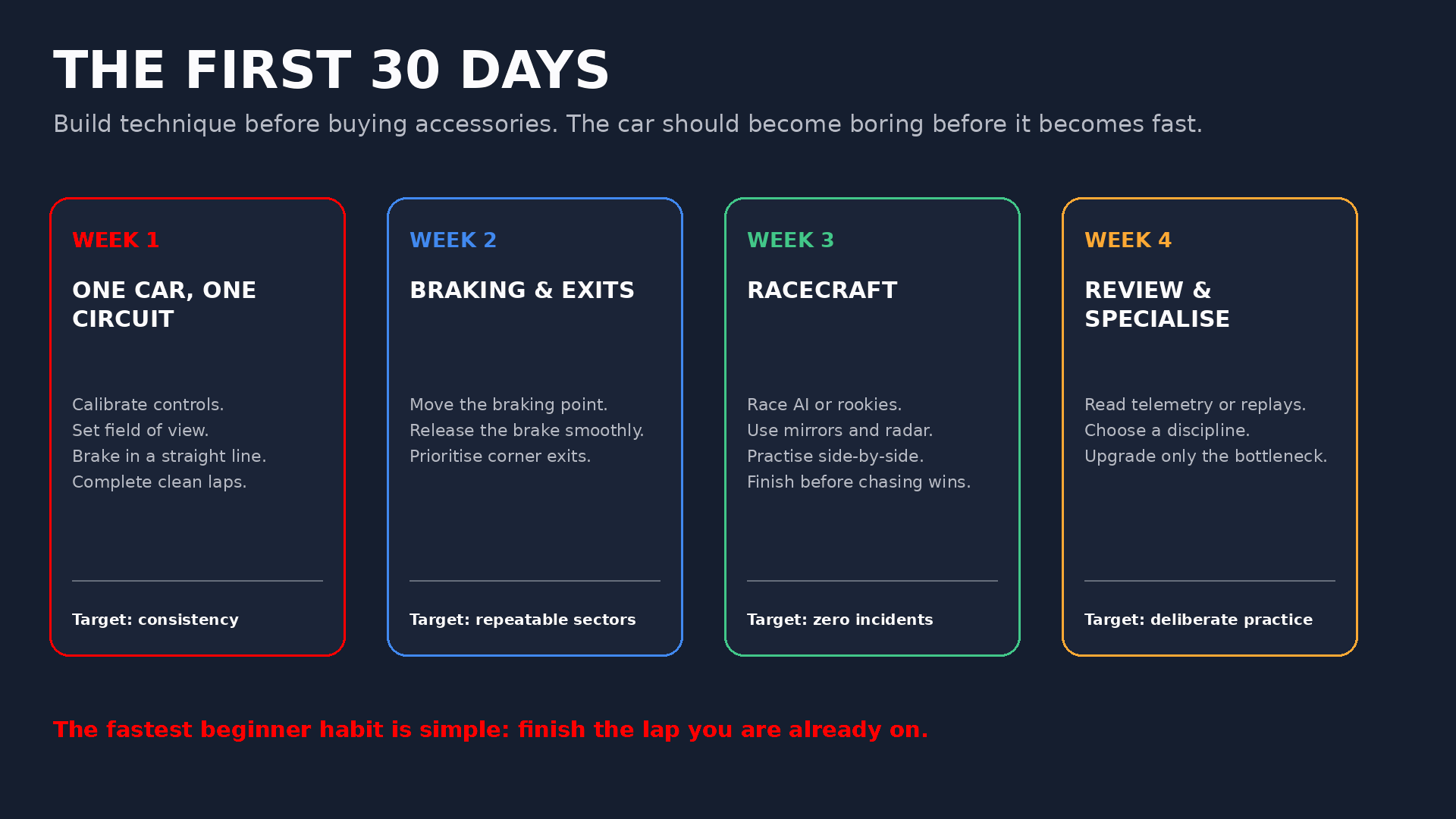
Technique before accessories. A first month structure for discovering what genuinely needs upgrading. Graphic: Auto Culture Society.
Continue with the complete guide
The Complete Guide to Sim Racing expands that method across PC, PlayStation 5 and Xbox, the major games, compatibility and licences, wheelbases, steering wheels and pedals, cockpits and seats, displays, VR, audio, tactile feedback and motion, manufacturers, budgets, maintenance and the first 30 days.
Method and currency note
This feature accompanies the Auto Culture Society Sim Racing Guide. Compatibility, bundles and prices can change. Confirm current platform and game support before purchase. Research was checked on 8 August 2026.