From Getaway Car to Garage Culture: How Grand Theft Auto Built a Virtual Car Scene
Grand Theft Auto began with a blunt instruction: find a car and use it. The vehicle was transport, escape route and temporary advantage. Nearly thirty years later, players discuss garage themes, fictional marques, wheel choices, paint codes, handling character and the return of a 1995 Cheetah as though the series had always been an automotive archive.
That change did not happen because every game became a better simulator. It happened because the worlds around the cars became more specific. A black executive saloon carried a different temperature from a fluorescent supercar. A lowrider belonged to a neighbourhood. A battered pickup suggested work, weather and an owner. The right machine completed the street before the player read a specification.
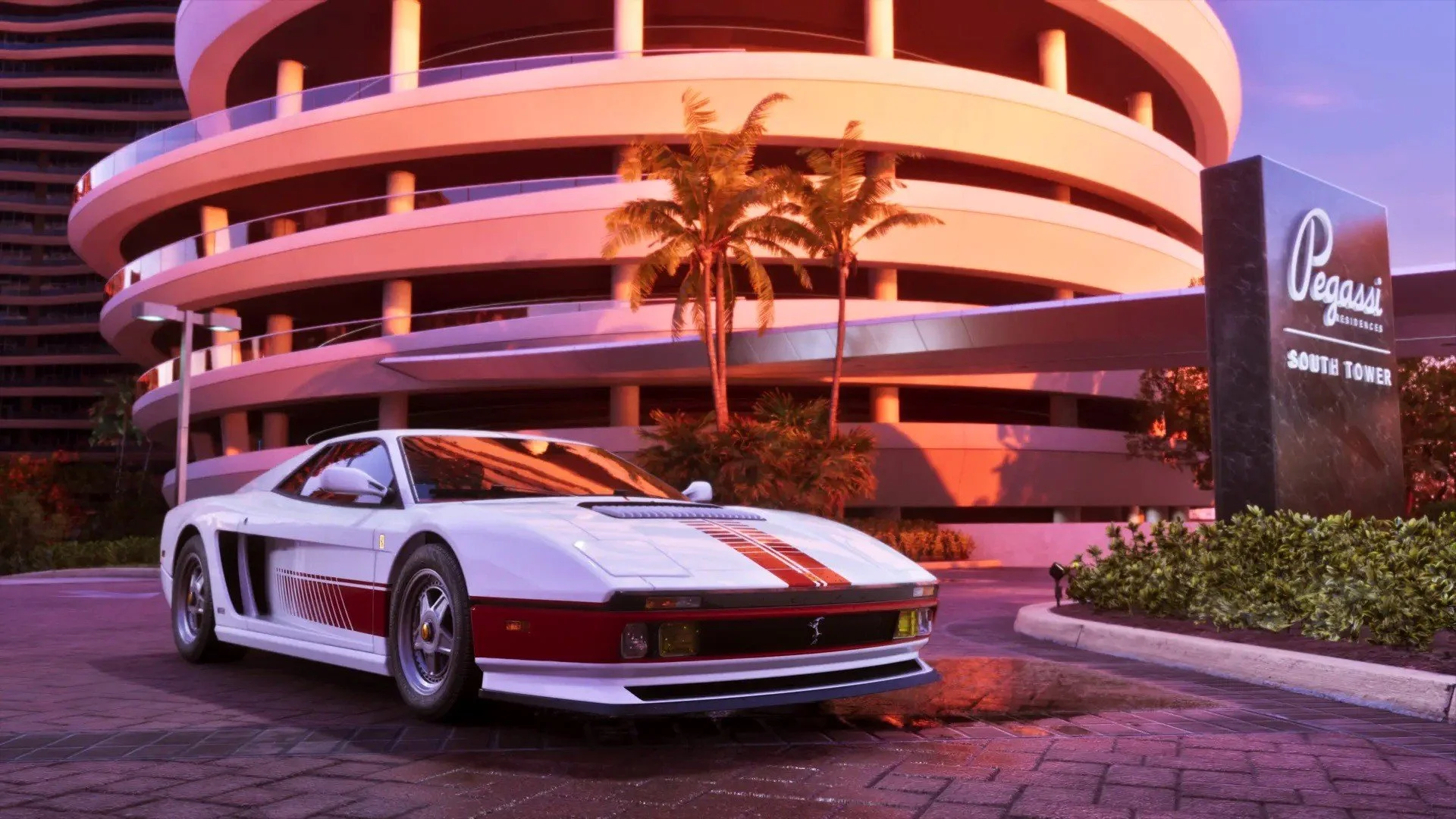
The car stopped being disposable when the world gave it a home, a history and an audience.
First came identity
GTA III used the Mafia Sentinel, Yakuza Stinger, Diablo Stallion and Yardie Lobo as moving uniforms. Vice City dressed its fleet in the decade with wedges, chrome, pastel paint and long American shapes beneath hotel neon. San Andreas then connected complete scenes to places, workshops and modification styles.
Then came ownership
GTA V gave its protagonists recognisable personal cars. GTA Online made ownership persistent, public and endlessly rearrangeable. The garage became a record of taste through Porsche inspired floors, tuner collections, police fleets, rally builds, factory colours and nostalgia rows. Los Santos Tuners finally gave that behaviour a social address in the LS Car Meet.
Now comes heritage
GTA VI official editions material names old and new vehicles, a classic car collection, specialist garages, a retro build and safehouse machines. The series is no longer only adding inventory. It is actively presenting its fictional catalogue as something with generations, provenance and scenes of its own.
What the guide covers
Grand Theft Auto: The Cars That Built a Culture is designed to be read as a history or used as a reference. It separates what Rockstar has confirmed from what can only be observed or reasonably expected, then follows the automotive story backwards through the series.
Leonida and GTA VI
A close reading of the officially named Cheetah, Stanier, Ganado Retro Build, Dominator Buggy, Shitzu Squalo, Rideout Customs, safehouse vehicles and Classic Car Collection, plus the different car cultures Leonida can plausibly bring together.
GTA V, GTA Online and the age of the garage
How personal vehicles, modification, collection, persistent ownership and the LS Car Meet changed the car from mission equipment into a long term account of taste.
Liberty City, the 3D era and the top down origins
A reverse journey through GTA IV weight, San Andreas complete car scenes, Vice City period fleet and the simple silhouettes and memorable names that established the language in 1997.
Fictional marques and reference appendices
A practical map of Grotti, Pegassi, Pfister, Vapid, Declasse, Bravado, Annis, Karin and other long running fictional families, followed by a chronology, GTA VI vehicle index, returning vehicle index, glossary, credits and further reading.
Start in Leonida. Drive backwards.
Read the Leonida section for the current picture. Jump to the fictional marque chapter when a badge or model lineage needs context. Use the chronology to compare eras and the two vehicle indexes as reference lists. Then return after release. The guide is built to make confirmed material easier to evaluate, not to replace the experience of the finished game.
The quickest way to understand Grand Theft Auto cars is to ask where each one belongs, then ask who would care if it disappeared.
Read the complete guide
Download the complete 52 page guide, Grand Theft Auto: The Cars That Built a Culture.
Auto Culture Society is not affiliated with or endorsed by Rockstar Games or Take Two Interactive.