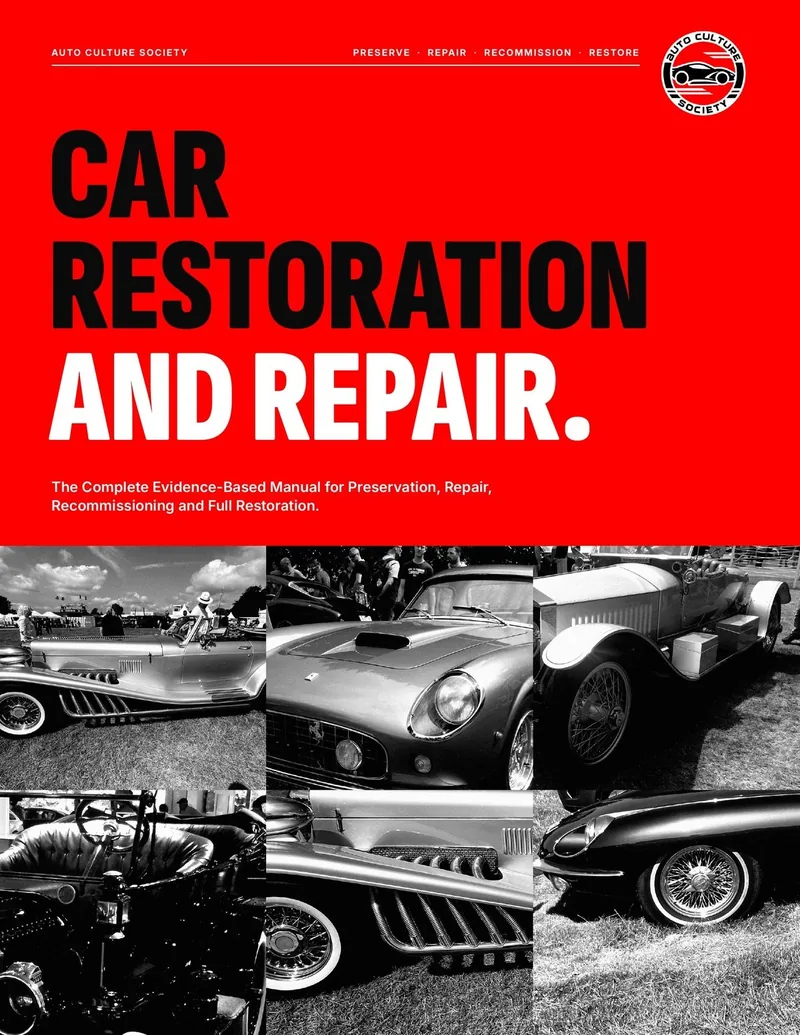
Car Restoration and Repair.
The Complete Evidence Based Manual for Preservation, Repair, Recommissioning and Full Restoration
Diagnose first.Preserve evidence.Intervene only as much as necessary.
Restoration begins with the complete, untouched vehicle, long before the spanners come out. This manual treats it as four disciplines working together: engineering, conservation, diagnosis and project control. The aim is a car that is safe, legible and defensible, and that explains what survived, what changed and why.
- Author
- Auto Culture Society
- Publisher
- Auto Culture Society
- Paperback
- 144 pages, printed in colour, 8.5 x 11 in
- ISBN
- 9798166869333 (paperback)
- Ebook
- Kindle and Apple Books
What isinside.
Seventeen parts and 53 chapters, in the order a restoration should happen. They follow the logic of a controlled project: identity, condition, intent and programme first, then the vehicle and its systems, then assembly, commissioning, originality, special conditions, the permanent record, use and restoration ethics.
- 01
Decisions and evidence
What restoration means, objective, identity and provenance, legal identity and roadworthiness, the condition baseline, scope and budget, specialists, photography and controlled dismantling.
- 02
Body and chassis
Structure, corrosion, metal repair, panels, paint investigation and finishing, suspension, steering, brakes, wheels and tyres.
- 03
Engines and driveline
Engine diagnosis and architectures, petrol and diesel, bottom end, heads and timing, lubrication and cooling, carburettors and injection, ignition, gearboxes, driveline and fuel systems.
- 04
Electrical, hybrid and electric
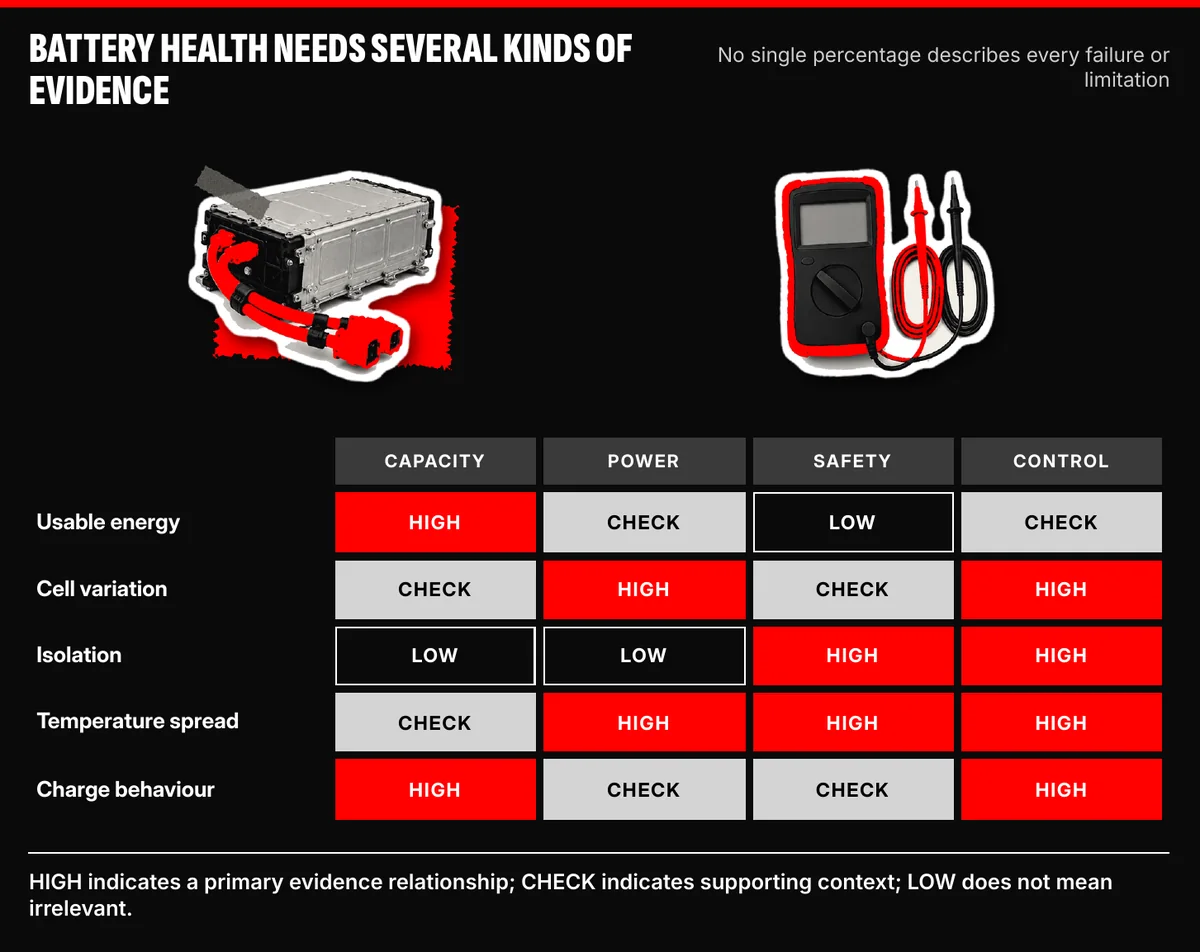
Wiring and control modules, hybrid architectures and batteries, what restoring an EV means, traction batteries, motors, inverters, charging and software.
- 05
Interior, reassembly and commissioning
Interior and ageing materials, fasteners and original finishes, controlled reassembly, first start, first movement, shakedown and validation.
- 06
Judgement and the record
Originality and reproduction parts, restomod engineering, barn finds, flood, fire and competition cars, modern classics, the permanent vehicle file, preserve or perfect, and the filmed vehicle record.
28 illustrated diagrams set out the main decisions, from the first inspection to the shakedown.
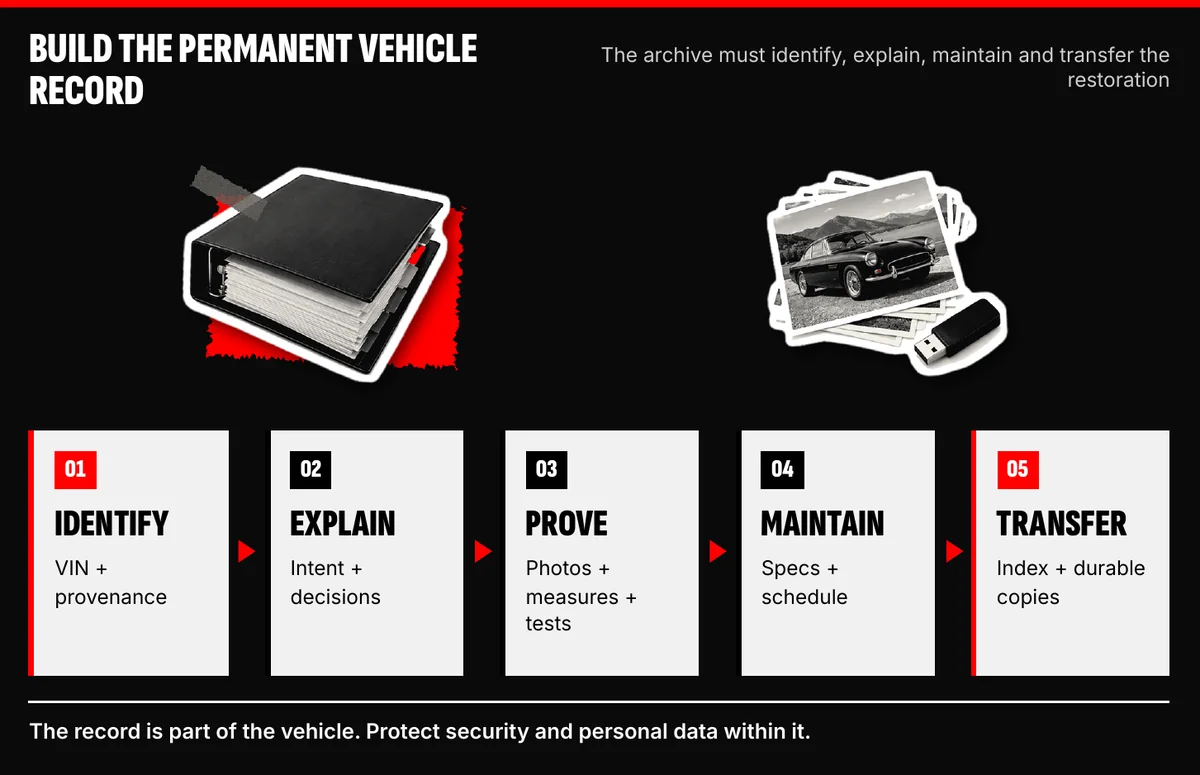
Several hundred decisions before step one.
Every project should be able to answer five questions before major intervention begins.
- What condition is the vehicle actually in?
- What must be done for safety and legal road use?
- What must be done for dependable operation?
- What should remain because it is original, rare or historically useful?
- What level of intervention is justified by the vehicle, its intended use and its owner?
Replacement can be correct, but it is never a diagnosis by itself.
Working records,not decorativeforms.
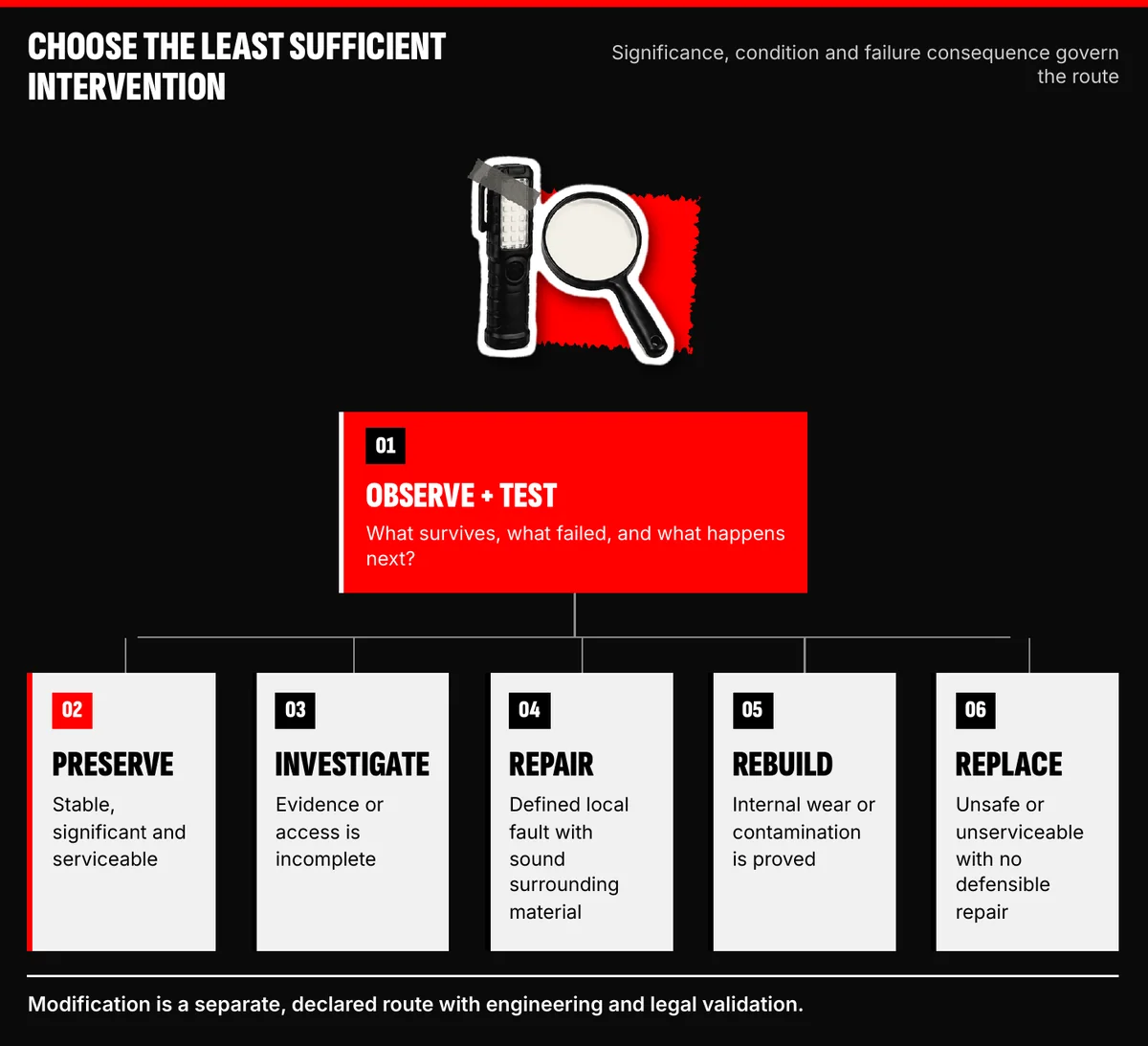
Twenty appendices and working records, made to be copied for each project.
- Prepurchase and first inspection sheet
- Condition baseline
- Intent statement
- Intervention matrix
- Parts register
- Engine build sheet
- Hybrid and EV condition records
- First start record
- High voltage activation record
- Shakedown log
- Final restoration certificate
- A failure library
- Terminology
- The 100 rules of car restoration
The 18 tables you fill in by hand are printed in the paperback. In the Kindle and Apple Books editions each one is replaced by a one line note, and the appendix lists, checklists, reference tables, terminology, the 100 rules and the sources all stay.
Who it isfor.
Owners, restorers and the people who commission them: anyone who wants a car that is safe, legible and defensible, and a record that explains what survived, what changed and why.
- 01
Owners planning a project
Set the objective, check identity and roadworthiness, record the condition baseline and agree the scope and budget before the work starts.
- 02
People doing the work
Controlled dismantling, structure, corrosion, metal repair, engines, driveline and electrics, then controlled reassembly, first start, shakedown and validation.
- 03
Owners working with specialists
Choosing specialists and controlling the project, with the intervention matrix, the parts register and the permanent vehicle file.
- 04
The difficult cars
Barn finds, flood, fire and competition cars, restomods, modern classics, hybrids and electric cars.
Beforeyou buy.
Does it cover electric and hybrid cars?
Yes. The book covers wiring and control modules, hybrid architectures and batteries, what restoring an EV means, traction batteries, motors, inverters, charging and software. The working records include hybrid and EV condition records and a high voltage activation record.
Is it a substitute for a workshop manual?
No. It is general guidance, not a substitute for the correct manufacturer information for the exact vehicle. Where work needs regulated qualifications, specialist equipment or a formal safe system of work, commission a competent specialist.
Is it written for the UK?
Its legal notes are for Great Britain. The chapter on legal identity, registration and roadworthiness starts from current DVLA guidance. Readers outside England, Scotland and Wales must check their own registration, roadworthiness, waste, refrigerant and workplace rules.
Which formats can I buy?
A paperback of 144 pages, printed in colour at 8.5 x 11 in, and ebooks on Kindle and Apple Books. The 18 tables you fill in by hand are printed in the paperback; in the ebooks each one is replaced by a one line note.
What does evidence based mean here?
Diagnose first, preserve evidence and intervene only as much as necessary. The book treats restoration as engineering, conservation, diagnosis and project control working together, so the finished car explains what survived, what changed and why.
More for the garage.